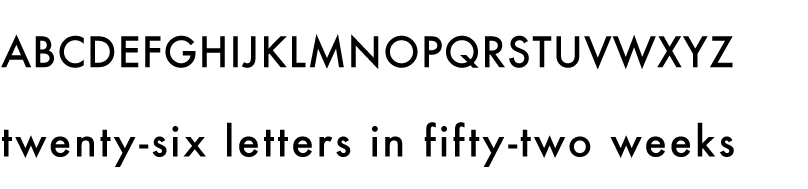

- sixteenth letter of the Latin alphabet, twelfth consonant
- phonetic name: "voiceless bilabial plosive"; sound: put your lips together and release with a short percussive POP of air (note the similarity to B, without the buzz of the vocal cord)
- Egyptian hieroglyph was a rectangular chair or mat
- the name for the letter in the Phoenician and Hebrew alphabets is pe (pronounced "peh"), which means "mouth"
- Greeks adopted it as their letter pi (uppercase Π, lower case π), which is now more commonly known for its mathematical ratio (3.1415926535...)
- in Roman, 'P' once represented 400
- just as M is associated with motherhood, P is the paternal letter (papa, pop, pater, père, papas, et al.)
- P is common in the 'f' phenome "ph" (i.e.: phone, dolphin, apostrophe), and can also be silent (i.e.: psychology, pneumonia, receipt)
- in shape, P is similar to a lower case d (rotated 180 degrees), as well as uppercase B, missing the lower bowl
- famous tongue twister: "Peter Piper picked a peck of pickled peppers..."
- the proper etiquette reminder "mind one's Ps and Qs" is derived from the printer's trade in the 15th century. Because of their similarity in letterform, printers had to pay special attention to lowercase b, d, p, and q when returning the printer blocks to their cases.
- in abbreviations "p." or "pg." means page, and "pp" means pages
- P is common in Latin and Greek prefixes (i.e.: pre-, post-, per-, pro-, para-, peri-, et al.)
- in music, "p" signifies piano (meaing "softly"), "pp" calls for piu piano (meaning "slower), and "ppp" stands for pianissimo
- in typography, "pt." stands for point, the smallest unit of typographic measurement
- P in education can stand for pass/passing
- the pilcrow or "blind P" (¶) is used in publishing to indicate paragraph
- ₱ is the symbol for the Philippine peso
- P in a circle (℗) is the sound recording copyright symbol
- associated with speech, Earth and peace (pax)
- 'p' in '9 p.m.' stands for post meridiem (meaning after midday)
- 'P' is the chemical symbol for phosphorus (#15 on the periodic table), colourless and transparent (in pure form), is an essential component of living systems and is found in nervous tissue, bones and cell protoplasm.
- 'P' in physics is Power, or momentum
- 'P' in money is penny or pence
- Vitamin P (aka flavinoids), plays a big role in making sure our bodies properly absorb Vitamin C, promotes proper capillary blood flow, and ensures that our red blood cells and the blood platelets do not clump together. It can be found in a variety of citrus fruits (especially the pulp), grapes and prunes, green vegetables, and buckwheat flour. (n.b.: Vitamin P is also a euphemism for the anti-depressants Paxil and Prozac)
- phonetic sound, "pee", is an excretory process (n.b. both "#1" and "#2" start with P)
- NATO phonetic alphabet: PAPA
- in the 16th century, a Dominican monk named Placentius wrote a poem of 253 hexametre verses with every word starting with the letter 'P'
- English writer William Oxberry was known as "the Five Ps": publisher, printer, poet, publican and player
- "'P' is much less friendly [than O]. It tends to lurk around just a few letters, and avoids 15 of them." - Simon Singh, The Code Book
- "The letter 'P', that broad, provocative expanse between O and Q, is one of the most ambivalent of all the twenty-six, for in it one finds pleasure and pain, peace and pandemonium, prosperity and poverty, power and pusillanimity...'P', the purloining letter, the stealer of sheep, is as hard to throw off as any addiction." -James Thurber, The Watchers of the Night
- "'P' is a porter with a load on his back." -Victor Hugo, French poet & playwright
- "The sound vibration of the consonant 'P' means 'heart, centre, sunset." - Joseph E. Rael
- P can also abbreviate page, parity, parking, part, participle, past, pastor, pawn, pence, per, peso, piano, pint, pipe, poice, population, Portugal, post, power, president, pressure, priest, prince, pro, proton
P.S.: p.s. is the abbreviation for post scrtiptum
